Thanksgiving is a time to appreciate what we have and think about what we want to accomplish in the years ahead.
For retirement investors, November is a good time to ask whether paying taxes today could help them keep more of their investment returns down the road.
One strategy worth exploring is a Roth conversion, particularly for investors who hold alternative assets within a self-directed IRA. While paying taxes on retirement assets today may seem counterintuitive, doing so could reduce your future tax burden.
How does a Roth conversion work?
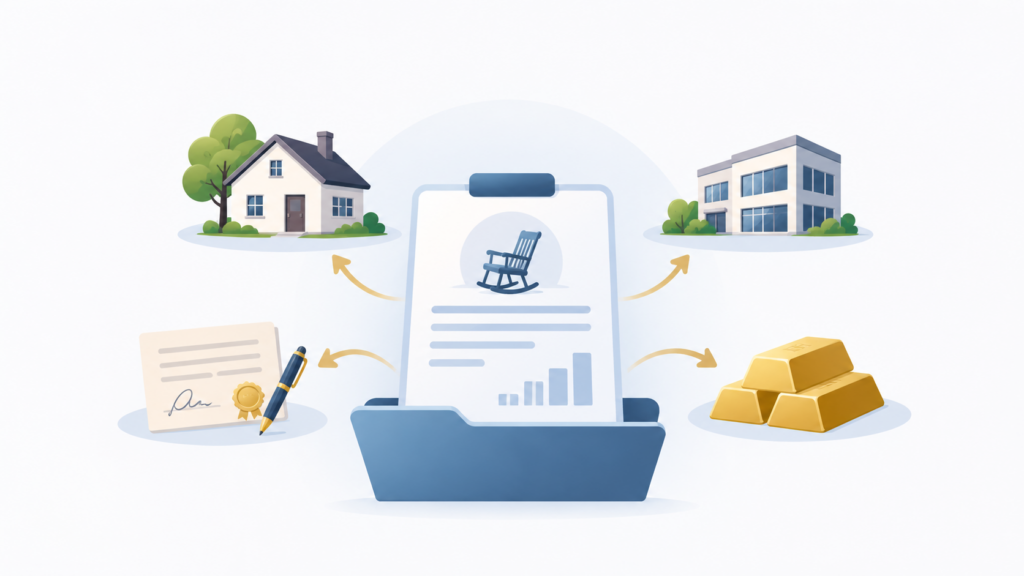
A Roth conversion involves transferring some or all of the assets in a traditional IRA into a Roth IRA. Investors pay income tax on the previously untaxed amount converted in the year of the conversion, while future qualified withdrawals, including investment earnings, are federal income tax-free.
Generally, tax-free withdrawals of earnings require reaching age 59½ and satisfying a five-year period that begins in the first tax year for which you funded a Roth IRA. Other qualifying circumstances exist. Separate five-year rules may also apply to withdrawals of converted amounts.
There are no income limits for making Roth conversions, and investors can convert a portion of their retirement savings over several years to help manage the tax implications.
The central question is whether paying taxes today could leave you with more retirement savings in the future.
Why alternative asset investors should pay attention
For investors who use self-directed IRAs to hold alternative assets, a Roth conversion deserves particular attention when investments have significant long-term growth potential.
Let’s say you have a $100,000 private equity investment in a traditional self-directed IRA. You expect to hold the investment for another 10 years.
If you convert the investment to a Roth IRA at its current fair market value and it subsequently doubles, the additional $100,000 in appreciation could eventually be withdrawn free of federal income tax, assuming qualified distribution requirements are satisfied.
If the entire $100,000 is taxable at an illustrative federal income tax rate of 24%, the conversion would result in a $24,000 federal tax bill. You need to weigh this immediate tax expense against potential future tax savings, considering your current and expected future tax rates.
Investment performance is uncertain, and a Roth conversion cannot be reversed if the underlying investment subsequently declines in value.
Alternative assets also introduce valuation considerations. Private investments and rental properties may require appraisals or other documentation to establish their fair market value before a conversion can take place.
One question investors may have is whether they need to sell their alternative assets to complete a Roth conversion. Depending on the investment’s structure, ownership restrictions and custodial requirements, an in-kind conversion may be possible, allowing investors to transfer assets without selling them.
When might a Roth conversion make sense?
Here are a few situations that could make a Roth conversion worth discussing with your financial or tax adviser:
- You are experiencing a year of lower-than-usual taxable income.
- You expect to be in a higher tax bracket during retirement.
- You have a long investment horizon and can afford to pay conversion taxes using funds outside your IRA.
- You want greater flexibility in retirement, as Roth IRA owners are not subject to required minimum distributions during their lifetimes.
If you are already required to take minimum distributions from your traditional IRA, keep in mind that the required distribution amount itself cannot be converted to a Roth IRA.
A conversion can also have unintended consequences, including higher Medicare premiums or reduced eligibility for certain tax benefits. Be sure to consider how a conversion fits into your overall financial plan.
Make the most of your year-end retirement review
November is a good time to review your retirement portfolio, assess your investment goals and explore opportunities with your financial and tax advisers.
If you are exploring a Roth conversion this year, start the conversation early. The valuation and administrative requirements for alternative assets can take time, especially with the December 31 deadline approaching.
At Preferred Trust, we are grateful for the opportunity to support investors as they pursue their retirement goals. If you are exploring a Roth conversion, our team can help you understand the custodial requirements and administrative steps involved in converting alternative assets held within a self-directed IRA.
Preferred Trust Company does not provide tax, legal or investment advice. Please consult a qualified professional before making a Roth conversion.